


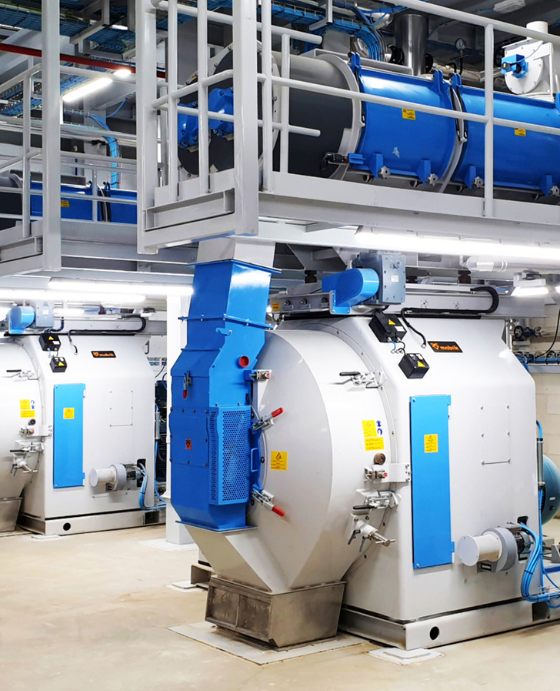
The die is the part that most determines the power consumption, output and pellet quality of a pelleting line. It is also one of the consumables with the biggest impact on cost per tonne. Extending its life doesn't depend on a single factor: it depends on how it's installed, how the pellet mill is fed and how it's inspected.
In this article we look at the practices that most affect how long a die lasts, and the signs that something isn't right.
Why a pellet mill die wears out
A die works under high pressure and in constant contact with the raw material. Wear is inevitable, but it speeds up when operating conditions aren't right:
- Raw material with abrasive particles or foreign bodies (sand, metals, stones).
- Uneven conditioning: too much or too little steam, or an unstable temperature.
- Incorrect gap between rollers and die.
- Abrupt starts and stops, or running the pellet mill empty.
- A die that doesn't match the raw material or the pellet format being produced.
5 practices to extend die life
1. Choose the right die for each product
Each die is specified according to the machine, the raw material and the pellet format: hole diameter, thickness and compression ratio. A die designed for another product will be overworked and wear out sooner. If you change formula or raw material, it's worth checking whether the die is still the right one.
2. Keep conditioning under control
A well-conditioned product enters the pellet mill with the right moisture and temperature, flows better through the holes and reduces friction. Uneven conditioning means more power consumption, more heat and more wear.
3. Set the rollers correctly
The gap between rollers and die must be checked regularly. Too tight causes metal-to-metal contact; too wide means the product doesn't compact properly and the material layer works unevenly. Checking the condition of the rollers is also essential: a worn roller speeds up die wear.
4. Protect the pellet mill from foreign bodies
Magnets and screens upstream of the pellet mill stop metal parts or stones from reaching the die. A single impact can break the bridges between holes or deform the working surface.
5. Control start-ups and shutdowns
Leaving the die full of product when you stop, or starting up with a cold, dry die, causes the holes to clog. For long shutdowns, follow the emptying and protection procedure recommended by the manufacturer.
Signs your die needs attention
- The pellet mill's power consumption rises to produce the same output.
- Pellet durability drops or more fines appear.
- Holes keep clogging.
- The working surface shows uneven wear or impact marks.
Spotting it in time lets you plan the work instead of suffering a shutdown. That's exactly the goal of preventive industrial maintenance done properly.
Recondition or replace the die
Depending on the wear, a die can be reconditioned or must be replaced. We assess this during the technical visit: if it can be reconditioned, we do it; if not, we propose replacing it with an original part. As the official MABRIK branch, we supply original dies and rollers for every type of pellet mill, with hole diameters from 1.8 to 25 mm and special pellet shapes.
Need your pelleting line checked?
If you notice the pellet mill is using more power, pellet quality has dropped or your dies aren't lasting as long as they used to, we can help. Find out more about industrial pelleting or tell us what you need. You can also call us on 655 432 581.